Author: Angela Hormberg

  • Proverbs 12:3

    Proverbs 12:3

    Root of the Righteous

    Commonplace –

    “A man shall not be established by wickedness: but the root of the righteous shall not be moved” (Proverbs 12:3).

    In Proverbs 12:3, Solomon declares that a wicked man does not have a firm foundation; he is constantly shifting in response to current trends. The righteous, however, have solid roots, which are firm and immovable.

    We can compare the righteous to math facts, like 1 + 1 = 2. That is an unchanging fact. It’s the same truth all over the world. Yet, the wicked will play games with facts. A wicked person would ask, “Does 3/3 + 3/3 = 2?” Most people do not like fractions and will become confused. The wicked person has manipulated the fact and caused the victim to doubt themselves. 3/3 + 3/3 = 2 is the same as 1 + 1 =2.

    More commonly, the wicked manipulate language. For instance, a common street hustle goes like this: A hustler will walk up to an unsuspecting victim and say, “I bet you $20 I can tell you where you got your shoes.” The victim thinks this is an easy bet, because there is no way the hustler will know where he bought the shoes, so the victim takes the bet. The hustler then says, “You got them on your feet.” The victim assumed he understood the hustler was asking where he bought the shoes, when the hustler was asking where the shoes currently were located. The hustler manipulated language to hoodwink the victim.

    The scams of the wicked are usually revealed or become known, causing them to have to constantly pivot to learn new tricks. They are continually at risk of having their wickedness discovered. In contrast, the righteous live with a clear conscience and a life rooted in Christ. As Matthew Henry notes, “Those that by faith are rooted in Christ are firmly fixed; in him their comfort and happiness are so rooted as never to be rooted up” (702).

    Works Cited

    Henry, Matthew. “Proverbs 12:3.” Matthew Henry’s Commentary On the Whole Bible: New Modern Edition. Volume 3 and Volume 6, Hendrickson Publishers, Inc., March 1996.

    Holy Bible: Giant Print with Study Aids. Dugan Publishers, Inc., 1984.

    © 2026 Angela Hormberg
  • Proverbs 12:2

    Proverbs 12:2

    Favor or Condemnation

    Commonplace –

    “A good man obtaineth favour of the Lord: but a man of wicked devices he will condemn” (Proverbs 12:2).

    We should aspire to God’s favor. In Proverbs 12:2, we are instructed on how to obtain it: be good, do what is right. Choose the path of the wicked and you invite God’s punishment.

    Works Cited

    Henry, Matthew. “Proverbs .” Matthew Henry’s Commentary On the Whole Bible: New Modern Edition. Volume 3 and Volume 6, Hendrickson Publishers, Inc., March 1996.

    Holy Bible: Giant Print with Study Aids. Dugan Publishers, Inc., 1984.

    © 2026 Angela Hormberg

  • Proverbs 12:1

    Proverbs 12:1

    The Love of Knowledge

    Commonplace –

    “Whoso loveth instruction loveth knowledge: but he that hateth reproof is brutish” (Proverbs 12:1).

    Matthew Henry’s insight on verse 12:1 is too good not to share.

    “We are here taught to try whether we have grace or no by enquiring how we stand affected to the means of grace” (701).

    How do we react to instruction? According to the Proverb, our reaction, loving or hateful, shows our character. Receive the instruction well and it is obvious you are a lover of knowledge. Become angry at the instruction and it is obvious you are a brute.

    Works Cited

    Henry, Matthew. “Proverbs 12.” Matthew Henry’s Commentary On the Whole Bible: New Modern Edition. Volume 3 and Volume 6, Hendrickson Publishers, Inc., March 1996.

    Holy Bible: Giant Print with Study Aids. Dugan Publishers, Inc., 1984.

    © 2026 Angela Hormberg

  • Proverbs 11 – Summary

    Proverbs 11 – Summary

    What I learned from Proverbs 11

    Now that we have come to the conclusion of Chapter 11, I circled back around and reread each post. Following is a brief topical summary of each verse in Proverbs 11.

    1. Proverbs 11:1 Treat others with careful attention and intention to act justly.
    2. Proverbs 11:2 Be humble.
    3. Proverbs 11:3 Be a person of integrity, undivided in spirit.
    4. Proverbs 11:4 Have an eternal outlook and value righteousness over wealth.
    5. Proverbs 11:5 Make good choices and pursue righteousness.
    6. Proverbs 11:6 Deliverance comes through righteousness.
    7. Proverbs 11:7 The wicked seek material goods, which die with them. Seek the eternal.
    8. Proverbs 11:8 The righteous man is delivered out of trouble because he makes good choices.
    9. Proverbs 11:9 The words of the hypocrite destroy his neighbor.
    10. Proverbs 11:10 Good triumphs eternally.
    11. Proverbs 11:11 The upright bless the city and raise it heavenward
    12. Proverbs 11:12 Be kind to your neighbor and hold your peace don’t allow petty jealousies steal it.
    13. Proverbs 11:13 Faithful people are counsel keepers.
    14. Proverbs 11:14 Seek and be wise counsel.
    15. Proverbs 11:15 Don’t be surety for a stranger or a neighbor.
    16. Proverbs 11:16 Be gracious women and strong men.
    17. Proverbs 11:17 Mercy benefits those we extend it to and ourselves.
    18. Proverbs 11:18 Sow righteousness and be a righteous influencer, embodying the fruits of the Spirit.
    19. Proverbs 11:19 Righteousness leads to life: take action and pursue it.
    20. Proverbs 11:20 Uprightness delights the Lord.
    21. Proverbs 11:21 The wicked will be punished, and the righteous will be delivered.
    22. Proverbs 11:22 Be a woman of discretion, grace and religion.
    23. Proverbs 11:23 Desire what is good.
    24. Proverbs 11:24 Giving blesses us.
    25. Proverbs 11:25 The liberal soul gives and has abundance, pours out and sees it return.
    26. Proverbs 11:26 Give what you have to help others. Don’t hoard.
    27. Proverbs 11:27 Seek goodness.
    28. Proverbs 11:28 Righteousness leads to flourishing.
    29. Proverbs 11:29 Keep peace in the home.
    30. Proverbs 11:30 The fruit of the righteous is a tree of life to others.
    31. Proverbs 11:31 We are all paid back for our actions, in this life or the next.

    Verses I specifically recommend for my children to ponder:

    1. Proverbs 11:20 – Uprightness delights the Lord. Therefore, make it your singular focus.

    One recurring theme in Proverbs 11 was pursuing righteousness while resisting wickedness and having an eternal outlook. Additional themes are maintaining your peace and giving liberally.

    Hopefully, you found the daily reflections on Proverbs 11 helpful. For me, they were convicting and fruitful. What are your thoughts? Ready for the next chapter? See you soon for Proverbs 12.

    Works Cited

    Henry, Matthew. “Proverbs 11.” Matthew Henry’s Commentary On the Whole Bible: New Modern Edition. Volume 3 and Volume 6, Hendrickson Publishers, Inc., March 1996.

    Holy Bible: Giant Print with Study Aids. Dugan Publishers, Inc., 1984.

    We'd love to hear from you!

    © 2025 Angela Hormberg

  • Proverbs 11:31

    Proverbs 11:31

    Recompense

    Commonplace –

    “Behold, the righteous shall be recompensed in the earth: much more the wicked and the sinner” (Proverbs 11:13).

    In his Commentary, Matthew Henry draws our attention to the interjection, “Behold”, placed at the beginning of the verse.

    “This, I think, is the only one of Solomon’s proverbs that has that note of attention prefixed to it, Behold!, which intimates that it contains not only an evident truth, which may be beheld, but an eminent truth, which may be considered” (701).

    In the final verse of Proverbs 11, the author tells us that the righteous and the sinner shall both be recompensed, paid back. Sometimes these judgments are executed on earth: the righteous are rewarded and the sinners are punished. However, that is not always the case. This verse is a promise that a future judgment is coming for the righteous and the wicked. Matthew Henry says it best,

    “Therefore, stand in awe and sin not. If those have two heavens that merit none, much more shall those have two hells that merit both” (701).

    Works Cited

    Henry, Matthew. “Proverbs 11:31.” Matthew Henry’s Commentary On the Whole Bible: New Modern Edition. Volume 3 and Volume 6, Hendrickson Publishers, Inc., March 1996.

    Holy Bible: Giant Print with Study Aids. Dugan Publishers, Inc., 1984.

    © 2026 Angela Hormberg

  • Proverbs 11:30

    Proverbs 11:30

    A Tree of Life

    Commonplace –

    “The fruit of the righteous is a tree of life; and he that winneth souls is wise” (Proverbs 11:30).

    The words of Proverbs 11:30, “[t]he fruit of the righteous is a tree of life”, hearken back to Genesis and the Garden:

    “And the Lord God said, Behold, the man is become as one of us, to know good and evil: and now, lest he put forth his hand, and take also of the tree of life, and eat, and live for ever. Therefore, the Lord God sent him forth from the garden of Eden” (Genesis 3:22-23).

    After Adam and Eve sinned, they were sent out of the Garden to prevent them from eating of the tree of life, which would have given them eternal life. Now in Proverbs 11:30, we read that those who are righteous bear fruit that is a tree of life. We know that righteousness only comes through faith in Christ; the righteous are those who have professed belief in Christ. The fruit of these Christians is sharing their faith with unbelievers.

    With this understanding that the fruit is the gospel, the second part of the verse, “he that winneth souls is wise”, becomes clear. A wise believer shares this fruit with unbelievers to win souls. Therefore, let us be wise and share the gospel with all we meet. As Matthew Henry notes in his commentary,

    “He that is wise, by communicating his wisdom, wins souls, wins upon them to bring them in love with God and holiness, and so wins them over into the interests of God’s kingdom among men” (701).

    Works Cited

    Henry, Matthew. “Proverbs 11:30.” Matthew Henry’s Commentary On the Whole Bible: New Modern Edition. Volume 3 and Volume 6, Hendrickson Publishers, Inc., March 1996.

    Holy Bible: Giant Print with Study Aids. Dugan Publishers, Inc., 1984.

    © 2026 Angela Hormberg

  • Daily Writing Prompt – 1900

    Daily Writing Prompt – 1900

    What animals make the best/worst pets?

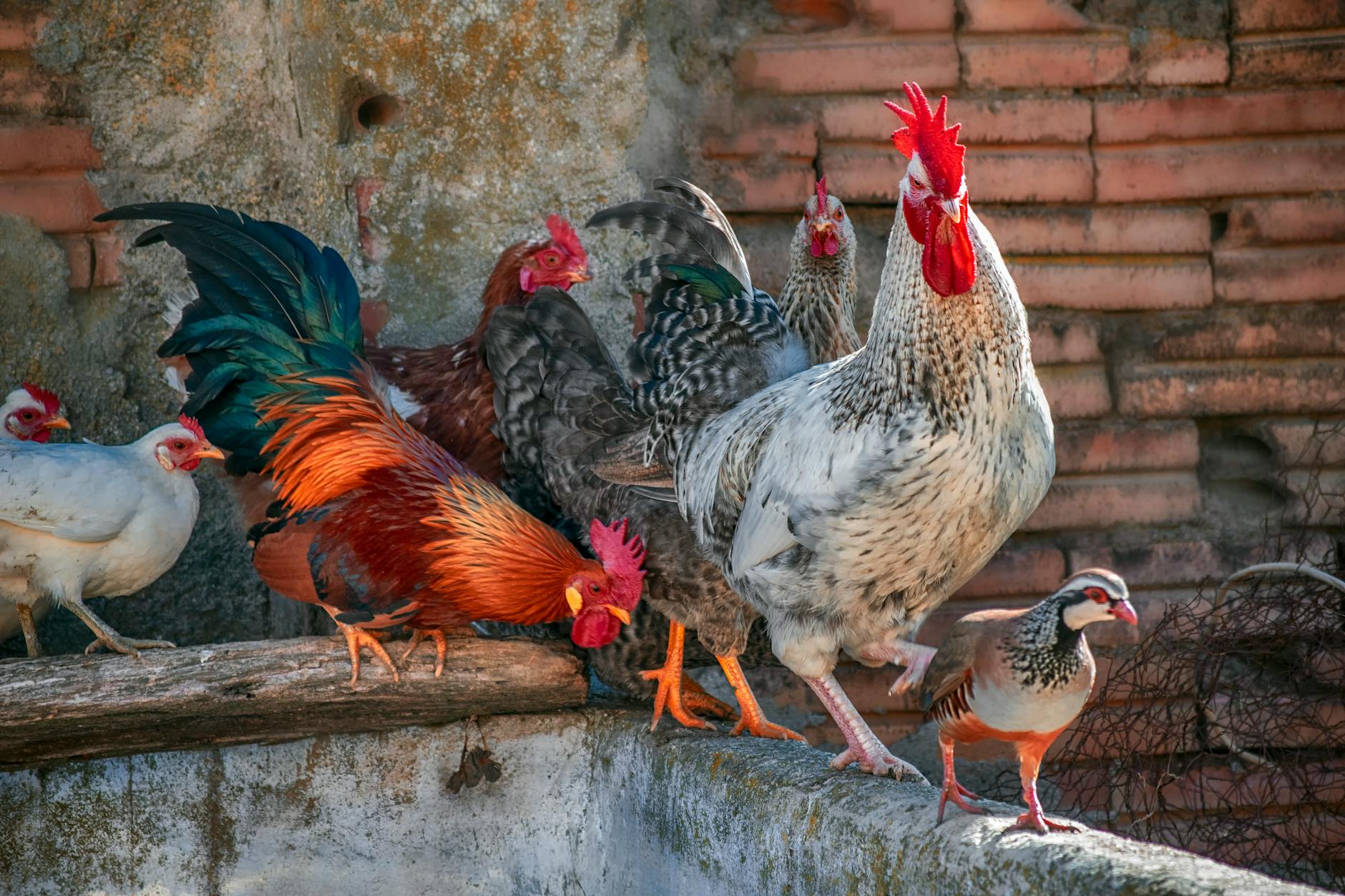
    After having many different types of pets, including cats, dogs, parakeets, rabbits, and chickens, I would say the best pets are chickens, because they reflect, even in a small part, human behavior. Think of all the idioms referencing chickens. Here are the first five that come to my mind:

    1. Come home to roost
    2. Hen pecked
    3. Fly the coop
    4. Don’t count your chickens before they hatch
    5. Pecking order

    Can you think of any chicken idioms?

  • Proverbs 11:29

    Proverbs 11:29

    Inheriting the Wind

    Commonplace –

    “He that troubleth his own house shall inherit the wind: and the fool shall be servant to the wise of heart” (Proverbs 11:29).

    Proverbs 11:29 serves as a caution for anyone causing strife in their home. Whether it is bad parenting that drives children away or rebellious children who bring strife, the provocateur, who sets out to destroy the family, will gain nothing and lose everything.

    In the second part of the verse, we learn what happens to those who are left isolated and alone, because they have left or broken up their own house. They will become servants to those who are wise of heart, who have kept peace and their houses together. Those houses will flourish.

    Works Cited

    Henry, Matthew. “Proverbs 11:29.” Matthew Henry’s Commentary On the Whole Bible: New Modern Edition. Volume 3 and Volume 6, Hendrickson Publishers, Inc., March 1996.

    Holy Bible: Giant Print with Study Aids. Dugan Publishers, Inc., 1984.

    © 2026 Angela Hormberg

  • Daily Writing Prompt 1898

    Daily Writing Prompt 1898

    What Olympic sport do you enjoy watching the most?

    When I was younger, the Olympic sport that captured my fancy was the women’s ice skating competition. I was caught up in all of it: the outfits, the music, the grace and ease with which they skated. They made it look so effortless.

    Then, I went ice skating for the first time. Barely able to stand, much less skate, my appreciation grew as I fully realized the amount of athleticism at the core of the programs: the jumps, the spins, all the technical requirements. I saw the skaters in a new light. I had more empathy for those who fell. I was cheering more for those who got up and kept going.

    That realization didn’t just inform my view of ice skating but of all the Olympic sports and spilled over into how I view others and their work. We encounter so many people each day at different places on their employment journey. What seems like an easy, effortless job requires skill. Is the person new at their job, working on acquiring a new skill, like I was when I first tried ice skating? Am I practicing patience with them? Am I grateful for their effort?

    What if we approached every skill we are learning with the focus of an Olympic athlete. Going all in on effort and getting back up and finishing professionally even when things don’t go well. Then, all those hours spent watching the Olympics are worth it, because we learned from it and applied it.

  • Proverbs 11:28

    Proverbs 11:28

    Flourishing

    Commonplace –

    “He that trusteth in his riches shall fall: but the righteous shall flourish as a branch” (Proverbs 11:28).

    In Proverbs 11:28, the psalmist warns us that trust in riches leads to death. We flourish only when we put our faith in God. Then, we are not dead but alive as a branch, which grows and blooms.

    Matthew Henry notes,

    “When those that take root in the wold wither those that are grafted into Christ and partake of his root and fatness shall be fruitful and flourishing” (Proverbs 11:28).

    Works Cited

    Henry, Matthew. “Proverbs 11:28.” Matthew Henry’s Commentary On the Whole Bible: New Modern Edition. Volume 3 and Volume 6, Hendrickson Publishers, Inc., March 1996.

    Holy Bible: Giant Print with Study Aids. Dugan Publishers, Inc., 1984.

    © 2026 Angela Hormberg